Serving Northern Utah24/7 Emergency ServiceIICRC CertifiedAll Insurance AcceptedMitigation Through Cleanup
Mold Remediation

Mold Remediation in Northern Utah

Mold follows moisture. We find the wet source, contain the work area when needed, clean or remove what is affected, and document the job clearly — without overselling what remediation can promise.

Licensed · Insured · IICRC|24/7 across Northern Utah

Get help today

Request restoration help

Call first — 24/7 response for active damage

Call (385) 625-7333

Your information is used only to respond to your restoration request.

Mold is a moisture problem

Mold is usually a moisture problem wearing a mold mask. A slow supply-line leak, a bathroom that never dries, or a basement that stayed wet after a flood gives mold the conditions it needs. Wiping a spot and leaving the wet material in place does not fix that.

Guardian Restoration serves homeowners and small businesses across Northern Utah. We find the moisture source, contain the work area when the scope calls for it, and clean or remove what is actually affected. We write down what we find so you can talk with your carrier. We do not decide coverage. The insurance company does.

Typical jobs

How these jobs usually look

Common mold job types — described in general terms, not customer stories.

01

After a vanity supply-line leak

A supply line under a bathroom vanity can run for days before anyone notices. The cabinet box, toe-kick, and the paper face of the drywall behind it stay wet long after the floor looks dry. A surface wipe of the cabinet front does not reach paper that has been wet. Paper-faced drywall and particleboard or MDF that stayed wet and is soft or crumbling usually come out. Hard, non-porous surfaces that can be cleaned stay. How dirty the water was, how long it sat, and what the material is made of decide remove versus clean — not a blanket rule to gut the bathroom. If water is still running, that is a water-damage job first — start with water damage restoration.
02

Bathroom moisture, poor ventilation, or wax-ring seepage

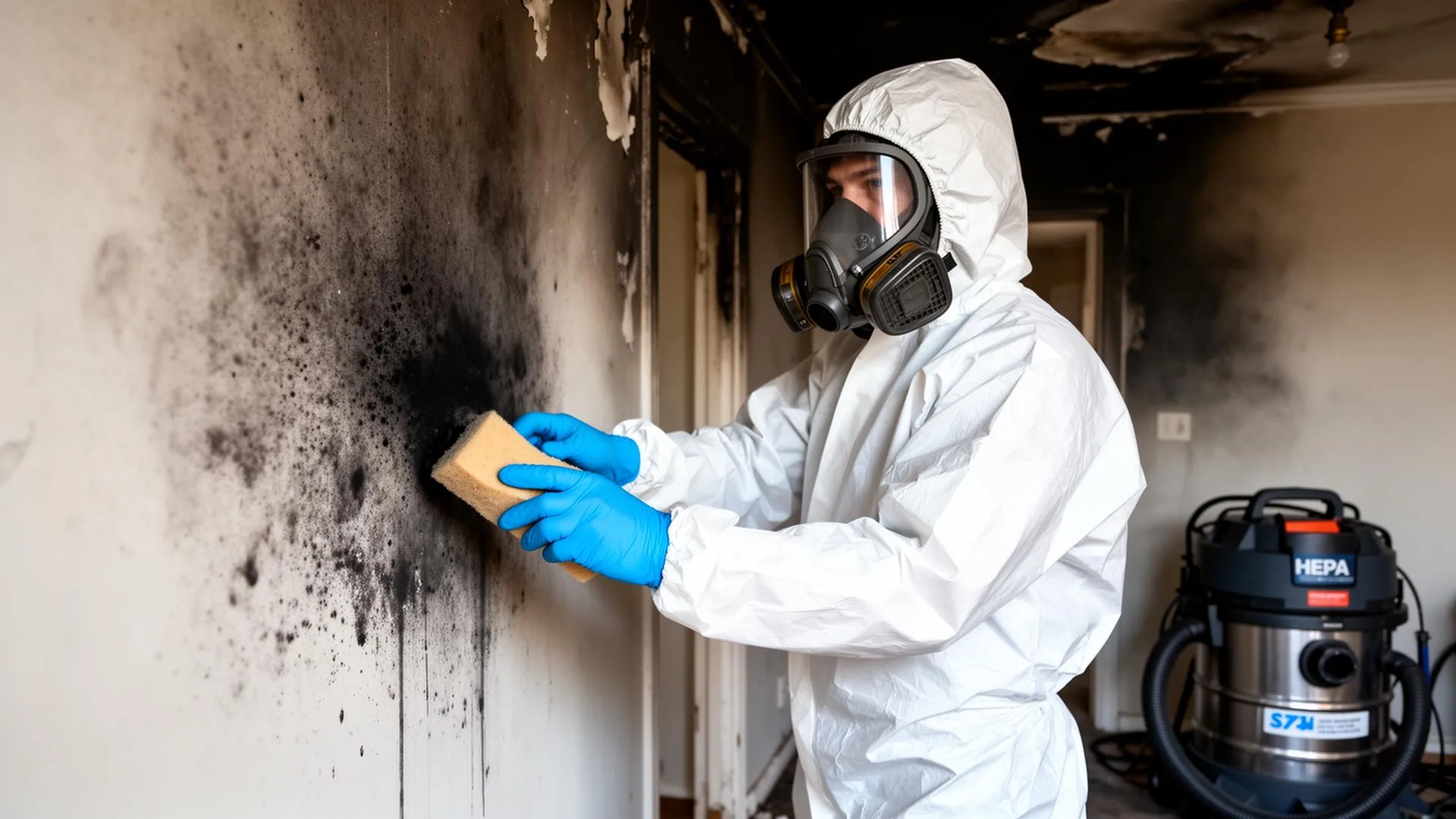
A fan that does not move air, a shower surround with failed caulk, or a toilet wax ring that seeps at the flange can wet the vanity base and the floor around the toilet without a dramatic flood. Swollen MDF vanity sides and soft flooring at the toilet are often limited tear-out, not a whole-room gut. Light containment (plastic at the doorway, covering the register) is enough for a small, stable bathroom job. Fuller containment and air filtration are for a larger area, heavy disturbance of moldy material, or when the work would otherwise open into the rest of the house. HEPA vacuuming and cleaning of remaining hard surfaces follow the removal. We do not fog a bathroom and call it done while the wet MDF is still in place.

03

Basement after window-well or sprinkler flooding

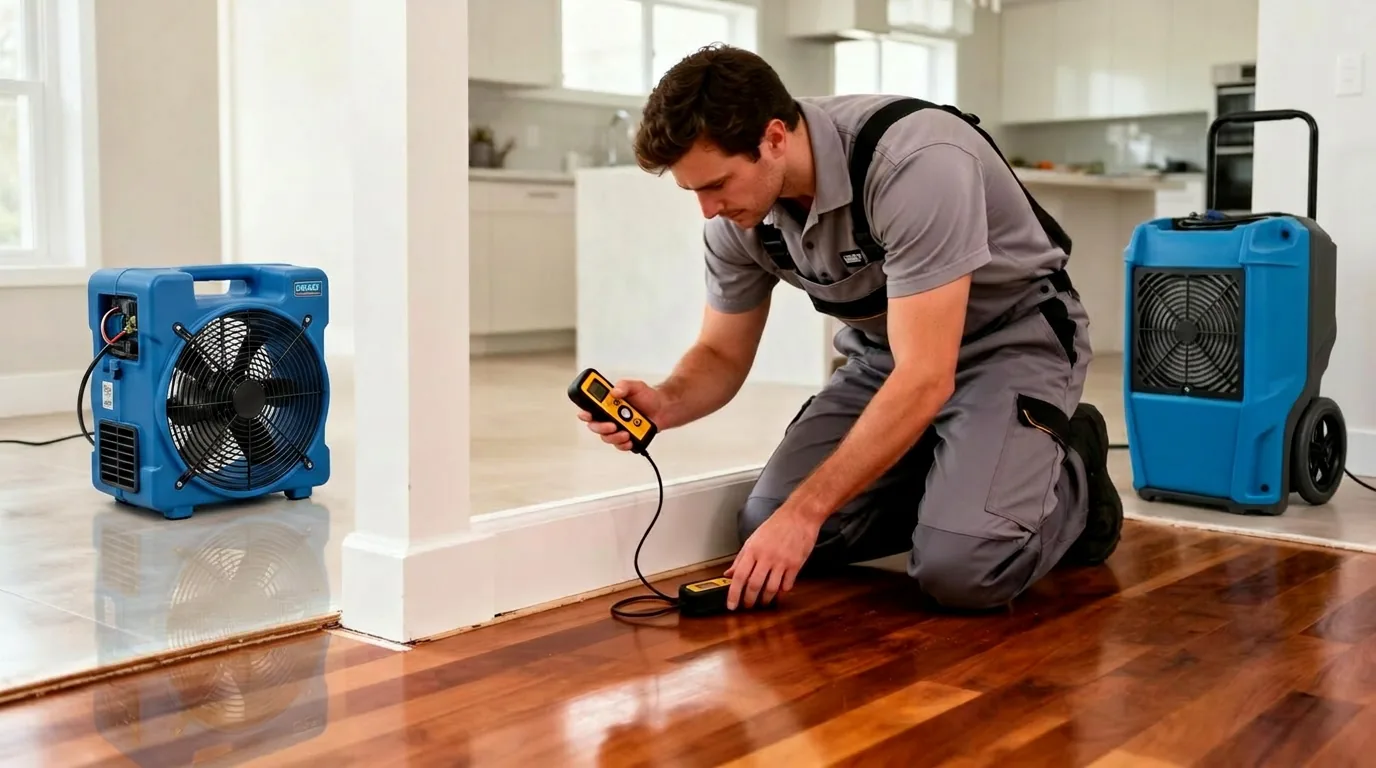
Water through a window well or from a burst sprinkler line wets insulation, the bottom plate, carpet, and tack strip. Mold on that material often shows up days later, after the standing water is gone. We map moisture in the walls and floor before we decide what comes out. Porous material that stayed wet and cannot be cleaned — wet fiberglass insulation, carpet pad, crumbled drywall paper — is removed. The structure is dried. Remediation cleaning of what remains happens after the materials are dry enough to clean, not while they are still soaking. Secondary mold is a moisture leftover, not a separate mystery. If active water is still present, start with water damage restoration and remediate once the source is stopped.

Process

What the mold remediation process includes

  • Moisture inspection of the area you can see and the materials behind it
  • Source identification — the leak, humidity, or prior water loss that is still feeding growth
  • Containment when the scope needs it, so dust and debris stay in the work area
  • Air filtration when disturbing moldy material would otherwise push particles into the rest of the home
  • Removal of materials that stayed wet and cannot be cleaned
  • Cleaning of remaining surfaces that can be salvaged
  • Documentation — photos and notes of what was wet, what came out, and what was cleaned
  • Guidance on ventilation, leaks, and humidity so the same conditions are less likely to return
  • Honest limit: we do not promise a home will be mold-free forever. If moisture comes back, mold can too. Fixing the moisture is the control that lasts.
Services

Mold services

Mold inspection

A look at visible growth and the moisture behind it. This is not a lab test and it is not a guarantee that every hidden spot was found. When an outside opinion or air sample is what you need, a third party can test; we can still do the moisture and cleanup work.

Mold cleaning

Cleaning of hard surfaces and materials that can be salvaged after the source is addressed. Cleaning is not a substitute for removing material that is soft, crumbling, or still wet.

Mold mitigation

Steps that reduce the conditions and the spread while the source is being fixed: stop the water, contain the area, dry what can be dried, and keep the rest of the home cleaner during the work.

Mold remediation

The full scope when growth and wet materials are already there: contain, remove what cannot be cleaned, clean what remains, dry, and document. Remediation does not include a promise that mold will never return.

Mold damage restoration

Repair coordination after affected materials have been removed: drywall, trim, flooring, and finishes that had to come out. We do not rebuild over material that is still wet or still moldy.

Water damage-related mold removal

Mold that shows up after a leak, flood, or incomplete dry-out. If water is still active, that loss is handled as water damage restoration first, then mold cleanup of what the water left behind.

Commercial mold remediation

The same sequence for a small office, retail space, or light commercial building in Northern Utah: find the moisture, contain the work area, remove what cannot be cleaned, clean the rest, and document it. Call (385) 625-7333.

Causes

Common causes of mold growth

Slow plumbing leaks

Previous water damage

Hidden moisture

Poor ventilation

High humidity

Bathroom moisture

Attic ventilation issues

Wet building materials

Supply-line leaks under sinks

Toilet or wax-ring seepage

Window-well or sprinkler flooding

Honest expectations

What mold remediation does not promise

  1. 1We do not guarantee a home will never have mold again. Mold needs moisture. If a new leak or ongoing humidity returns, growth can return.
  2. 2We do not promise what insurance will pay. Coverage depends on the policy and the cause of loss. We document what we see and what we do. The carrier decides.
  3. 3A wipe of a visible spot is not remediation when the material behind it stayed wet.
  4. 4We do not tear out every wall because mold was found in one place. Removal follows what is wet, porous, and not cleanable.
  5. 5We are not a substitute for a third-party mold test when you want an outside lab result. Inspection and remediation are the moisture and cleanup work. Testing, when you want it, is separate.
  6. 6Leaving the home is not automatic. It depends on who lives there, how much material is being disturbed, and how well the work area is contained. We say so plainly on the job instead of using one rule for every house.
FAQ

Mold remediation questions

How do I know if I have a mold problem?+

Musty odor, visible growth, or materials that stayed wet after a leak are the usual clues. A stain by itself is not proof. We look for the moisture, not just the color on the wall.

Is mold covered by insurance?+

Sometimes, when it follows a covered water loss. It is often limited or excluded when the moisture was long-term or maintenance-related. We do not promise coverage. We document the job. Your carrier decides.

Do you test for mold?+

Our inspection is a moisture and conditions look, not a lab test. If you want sampling for an outside opinion, a third party can do that. Testing does not replace fixing the leak or cleaning the affected material.

What is the difference between mold inspection and mold remediation?+

Inspection finds the moisture and the affected materials and explains the scope. Remediation is the containment, removal, cleaning, and documentation when that work is needed. One can happen without jumping straight to a full gut.

Can mold come back after remediation?+

Yes, if moisture comes back. Remediation removes what is affected now and addresses the source we can find. It is not a lifetime warranty against future leaks or humidity.

Do I need to leave the home during mold remediation?+

Not always. Small, well-contained bathroom work often does not require it. Larger disturbance, sensitive occupants, or a wide-open work area can. We tell you what this job needs instead of a blanket rule.

What if water is still leaking?+

Stop the source and treat it as water damage first — start with water damage restoration. Mold cleanup of wet materials comes after the water is controlled.

Will you remove all the drywall?+

No. Paper-faced drywall that stayed wet and is moldy or crumbling comes out. Dry, cleanable surfaces stay.

Do you work on commercial buildings?+

Yes. Small offices, retail, and light commercial in Northern Utah follow the same moisture-first sequence. Call (385) 625-7333.

What areas do you cover?+

Northern Utah, including Salt Lake, Davis, Weber, Utah, Wasatch, and Summit counties. (385) 625-7333.

Available 24/7 · Northern Utah

Seeing mold or a musty smell?

Call (385) 625-7333. We will look for the moisture first, explain what actually needs to come out, and document the work for your claim.