
How to Tell If Your House Has Mold
Most people don't see mold first. They smell it. A musty smell in a room that should smell fine is the most common first sign we hear about, and it usually means water has been sitting somewhere for a long time.
Visible mold takes a while to show up. Not seeing any doesn't mean you don't have it.
IICRC-certified water restoration technicians (WRT) · Licensed Utah General Contractor B100 #14314902-5501
What it looked like on a real job in Holladay
On a job in Holladay, the main water line had been leaking for a while and nobody knew. The family found out when they lifted the granddaughter's gymnastics mat off the floor. The underside was covered in mold. After that, they started noticing it on the baseboards and the drywall.
Here's what we did, in order:
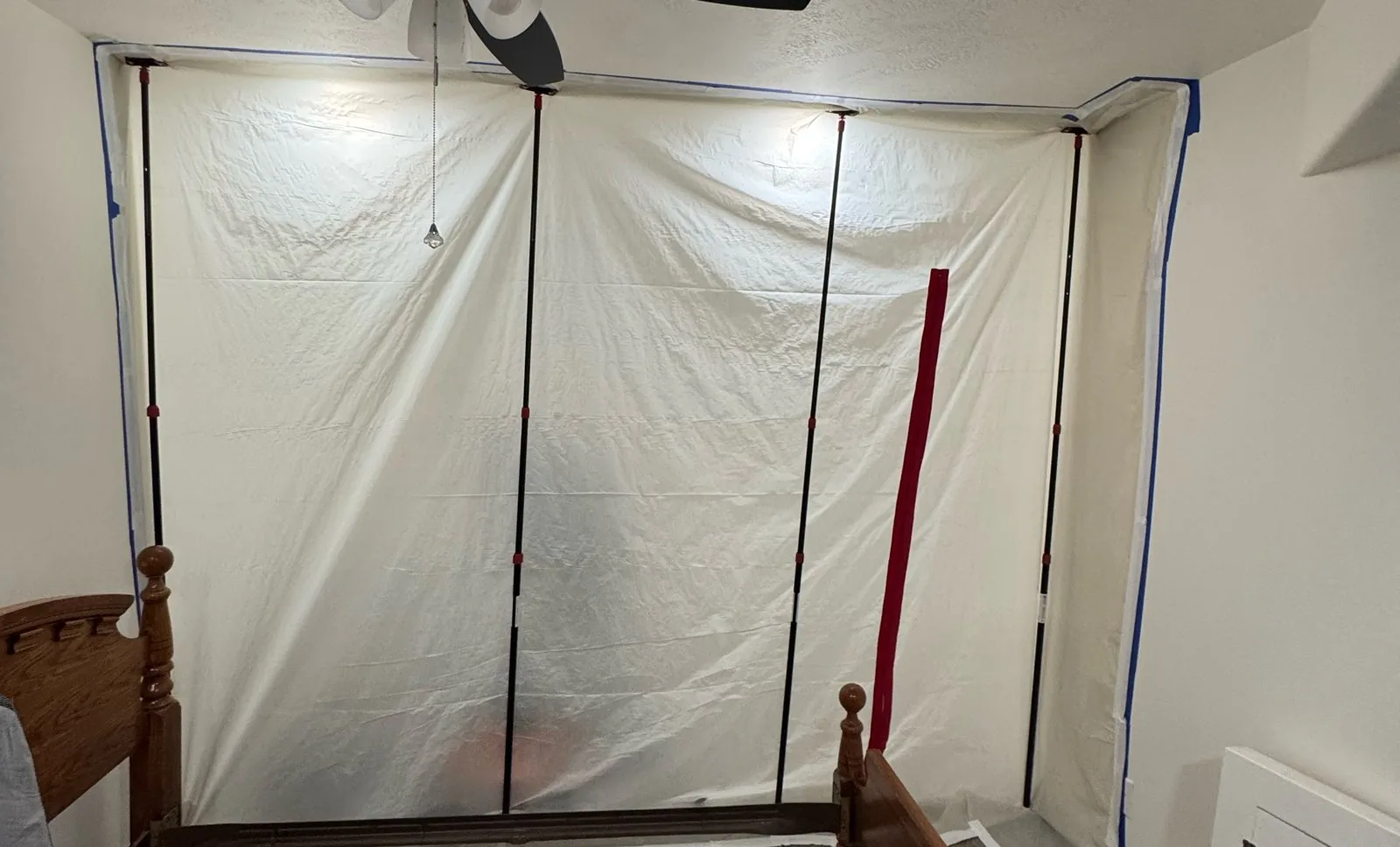
- Sealed off the area with containment before any demo. Tearing out moldy material in an open room sends spores everywhere.
- Put the area under negative air pressure. We ran an air scrubber vented to the outside for three days.
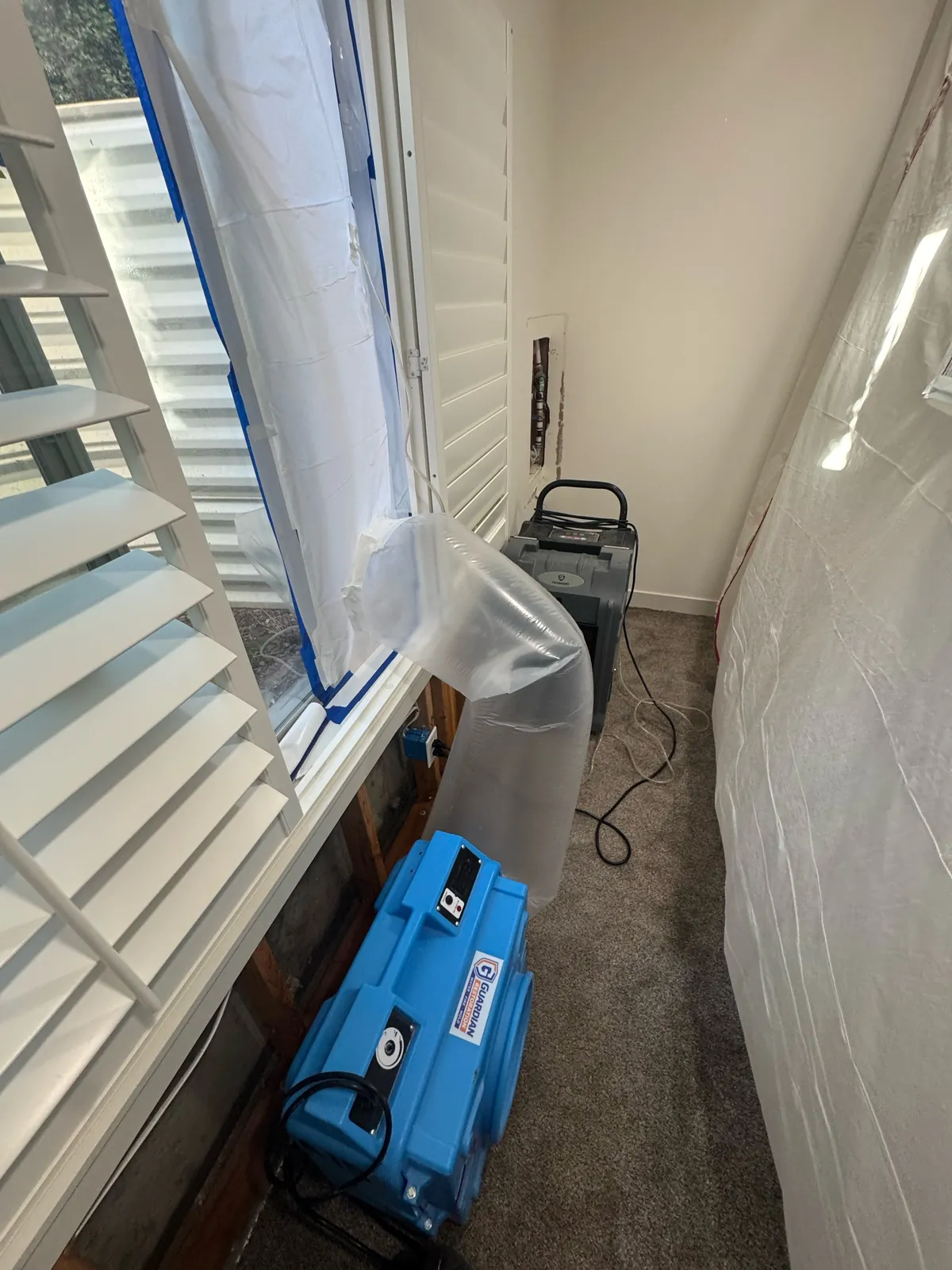
- Covered the HVAC vents during demo so spores couldn't travel through the system into other rooms.
- Wiped down the walls inside the containment.
- Had a third-party tester take post-demo air samples to confirm the spore count was no longer elevated.
The mold was the symptom. The real problem was a main water line leak nobody knew about.
5 signs your house has mold
- A musty smell. This is the most common first sign. It usually means a leak has been going on for a while.
- Swollen baseboards. Baseboards soak up water and puff out at the bottom.
- Sagging drywall. Drywall that has stayed wet starts to droop or bow.
- Marks or stains on the drywall. Faint discoloration on a wall or ceiling is worth a closer look with a flashlight.
- Mold you can actually see. By the time it's visible, it has usually been growing for a while, often on the back of something like a rug, mat, or baseboard first.
Also think back. If you've had a leak in that spot before, tell whoever inspects it. Past water damage is one of the best clues for where to look.
Where mold hides in Utah homes
The three places we find mold most often are bathrooms, attics, and basements.
Mold needs three things to grow: darkness, moisture, and a food source. Bathrooms, attics, and basements usually have all three. A bathroom stays damp after every shower. An attic is dark and can get wet from a roof leak nobody sees. A basement is dark and is where water collects when it gets in through a window well.
How to detect mold you can't see
Hidden mold is usually behind drywall, under flooring, or in an attic. Here's how we track it down.
Moisture meter and thermal camera
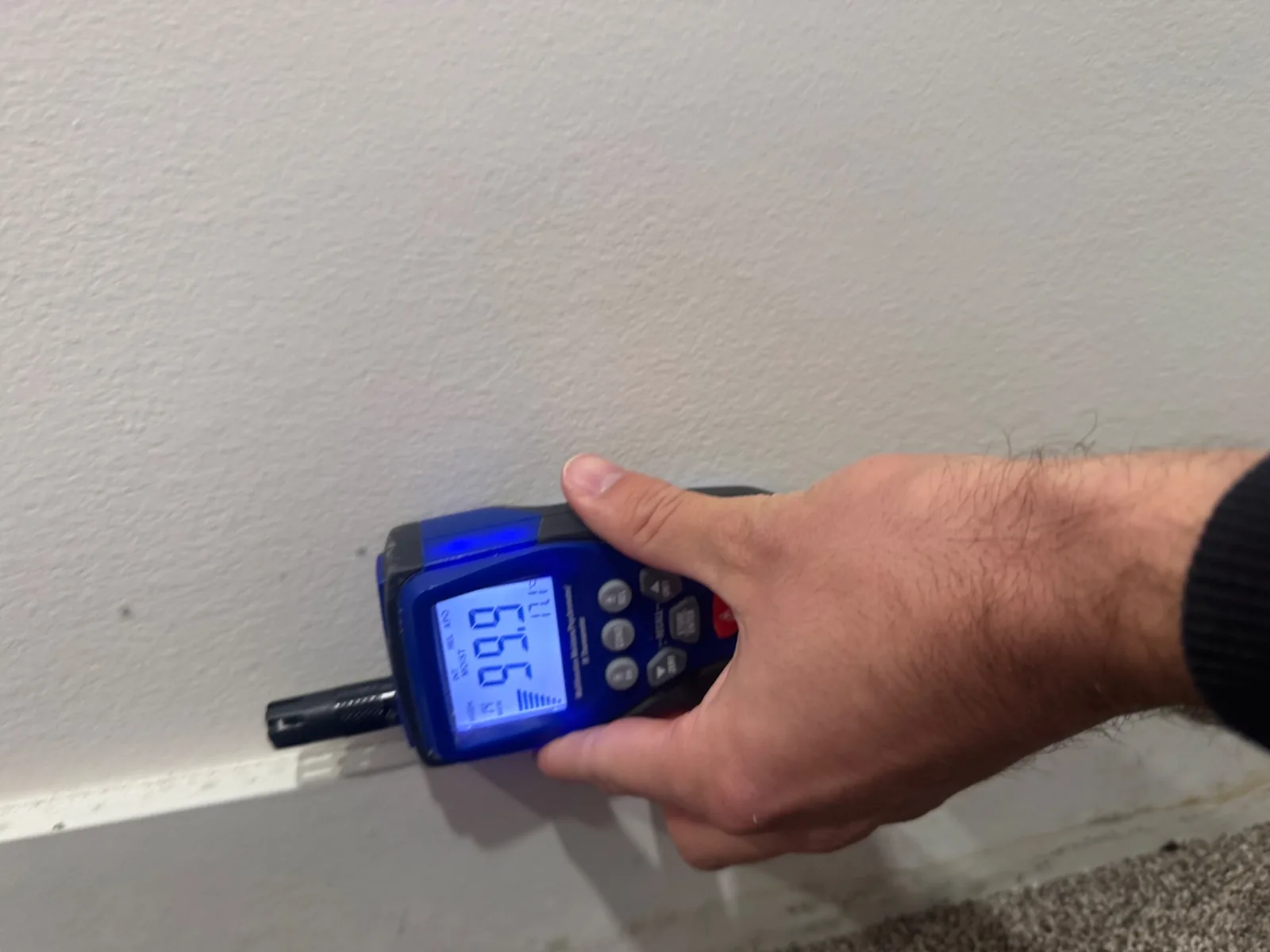
A moisture meter tells you whether a material, like drywall or a baseboard, is wet right now. A thermal camera helps show where moisture is spreading behind a surface. If something is wet, the conditions for mold are there.
A flashlight and a trained eye
A lot of hidden mold gives itself away if you know what to look for. Shine a flashlight along walls and baseboards and look for sagging drywall, marks on the drywall, and baseboards that have swelled. Combine that with what the homeowner tells us, like "we had a leak here last year," and we can usually narrow it down to the right spot.
Is a mold test worth it?
Most of the time, yes, especially when you can't see any mold. A mold sample test is usually cheaper than opening a wall and then patching and repairing it. It shows which room has elevated spore counts without any demo.
Testing also helps when there's no active moisture. If the moisture meter says everything is dry now but something still seems off, a test can confirm whether mold is there.
Can you paint over mold?
No. Painting over mold doesn't get rid of it. The mold is still on the building material. It's still in the drywall.
Some paints may slow it down a little, but the mold is still there and it's still going to grow. All you've done is hide it, and maybe hide the leak that caused it too.
Can you clean mold yourself?
If it's surface mold and it wipes right off, a homeowner can usually handle it.
The bigger question is why it showed up there. Mold collects where there's moisture, and that moisture almost always comes from water getting in somewhere. Wiping it off without fixing the cause means it'll come back.
Call a professional if:
- the mold doesn't wipe right off
- the drywall is sagging or the baseboards are swollen
- you smell it but can't find it
- it keeps coming back after you clean it
What causes mold in a house
Almost every mold problem we see comes back to water getting in somewhere. These are the causes that come up most:
- Showering without the bathroom fan on. Steam with nowhere to go leads to surface mold on ceilings and walls.
- A toilet that's been leaking for a while. Slow leaks at the toilet soak the floor and subfloor long before anyone notices.
- Window well leaks. When a window well doesn't have a sump pump and there's a heavy rain, water comes right into the basement.
- Roof leaks into the attic. These can go on for a long time. Often the homeowner only finds out when it finally drips through to the ceiling below.
- Slow leaks you can't see. Like the Holladay job: a main water line leak nobody knew about.
How to prevent mold in your house
- Always run the bathroom fan when you shower.
- Buy a few small water leak alarms. They're cheap and easy to find online or at any hardware store. Put one under each sink, near your faucets, and near any window well that's given you trouble. They go off when they sense water, so a slow leak gets caught in days, not months.
- Deal with leaks right away. Mold can start growing within 24 to 48 hours of something getting wet.
- Check your attic now and then with a flashlight, especially after a big storm. Don't wait for a stain on the ceiling.
- Pay attention to musty smells. If a room starts smelling musty, find out why before it turns into visible mold.
Checking for mold after water damage
If you've had a leak or flood, assume the wet materials need to be checked even if everything looks dry. Mold can start growing within 24 to 48 hours. Drywall and baseboards can look fine on the outside and still be wet behind the surface, which is where a moisture meter comes in.
Read more about mold after water leaks, including why a fan alone usually isn't enough.
Does homeowners insurance cover mold?
Usually not. Homeowners insurance typically doesn't cover mold because insurers treat it as long-term damage: a maintenance issue or a slow leak.
Every policy is different, and your carrier makes the final call. If the mold followed a sudden water loss that was covered, it's worth asking your carrier. We document what we find so you have it when you talk to them. See how we help with water damage insurance claims.
What happens when we find mold
- Free inspection. We look for the moisture first, using a moisture meter, a thermal camera, and a flashlight, and recommend a mold test when it makes sense.
- Find the source. We find the leak or moisture problem feeding the mold.
- Contain the area before any demo, with negative air pressure and an air scrubber vented outside.
- Cover HVAC vents so spores don't travel through the system.
- Remove what can't be saved, and clean what remains inside the containment.
- A third-party tester takes post-demo air samples to confirm the spore count is no longer elevated. Using an outside tester keeps the results unbiased.
See the full mold remediation service.
Smell something musty? Call (385) 625-7333 for a free inspection.
Mold questions
How do I know if my house has mold?+
The most common first sign is a musty smell. It usually means water has been sitting somewhere for a long time. Other signs are swollen baseboards, sagging drywall, and marks on the drywall. Visible mold takes a while to show up, so not seeing it doesn't mean it isn't there.
How do you detect mold in a home if you can't see it?+
A moisture meter and a thermal camera show whether materials are wet right now. A flashlight helps spot sagging drywall, marks, and swollen baseboards. When there's no active moisture, a mold sample test can confirm whether mold is present and which room has elevated spore counts.
Is a mold test worth it?+
Most of the time, yes, especially when there's no visible mold. A test is usually cheaper than opening a wall and then patching and repairing it, and it shows which room has elevated spore counts without demo.
Can you paint over mold?+
No. Paint doesn't remove mold. It stays on the building material and in the drywall, and it will keep growing under the paint.
How do you prevent mold in a house?+
Always run the bathroom fan when you shower. Put small water leak alarms under sinks, near faucets, and near any window well that's had problems. Fix leaks right away.
Where does mold grow most in a house?+
Bathrooms, attics, and basements. Mold needs darkness, moisture, and a food source, and those spaces usually have all three.
Can I clean mold myself?+
If it's surface mold that wipes right off, a homeowner can usually handle it. Then find out why it's there, since it's almost always water getting in. If it doesn't wipe off, comes back, or the drywall is sagging, call a professional.
Does homeowners insurance cover mold?+
Usually not. Insurers typically treat mold as long-term damage from maintenance problems or slow leaks. Your policy and carrier decide.
How do you know mold removal worked?+
Post-demo air samples from a third-party tester confirm the spore count is no longer elevated.
Smell something musty?
Call (385) 625-7333 for a free inspection.